Coalition Member Spotlight
On-Demand Learning with ASU’s Community Educator Learning Hub
In June 2026, the Partnership for Student Success (PSS) had the opportunity to connect with Monique Reveles and Lauren Conn from the Arizona State University Mary Lou Fulton College for Teaching and Learning Innovation to learn more about their Community Educator Learning Hub (the “Hub”). The Hub provides over 200 highly-focused and engaging short modules or “nanocourses” to support PK-12 community educators serving as tutors, mentors, success coaches, and more.
Thanks to support from the Leon Lowenstein Foundation, individuals can create a free account on the Community Educator Learning Hub, and organizations can request free access and onboarding support by contacting CELearningHub@asu.edu.
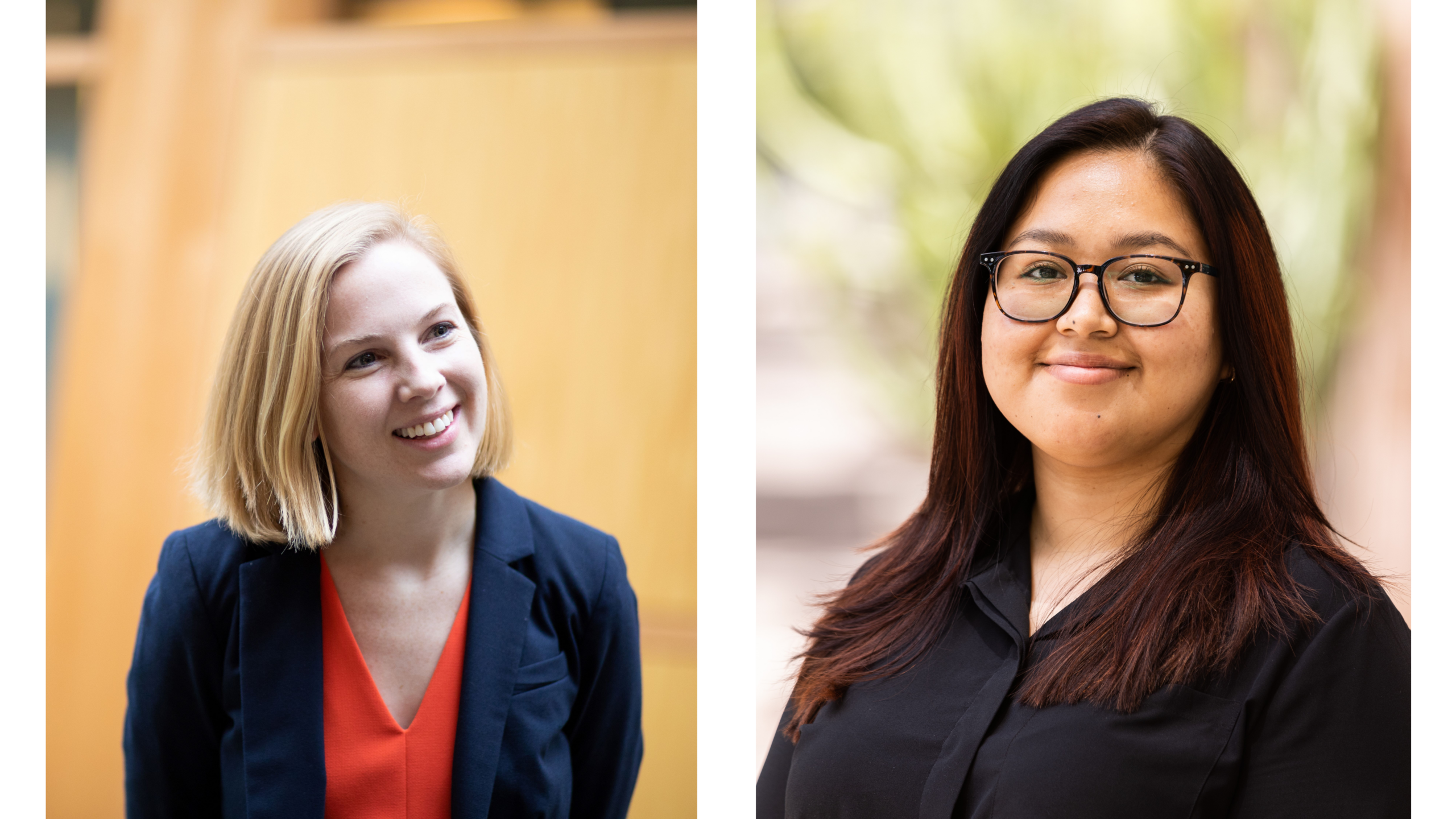
Let’s hear more from ASU about the Hub and its role in strengthening student support systems.
Jen LoPiccolo, PSS (JL): Tell us about the Community Educator Learning Hub and how it aligns with the mission of the Partnership for Student Success to expand evidence-based and people-powered student supports?
Monique Reveles, ASU (MR): Our work is grounded in the idea that people who are already showing up for children, in roles such as tutors, mentors, or student success coaches, and our community members should have access to the same tools and evidence-based teaching techniques that are traditionally only accessible in certification and degree programs.
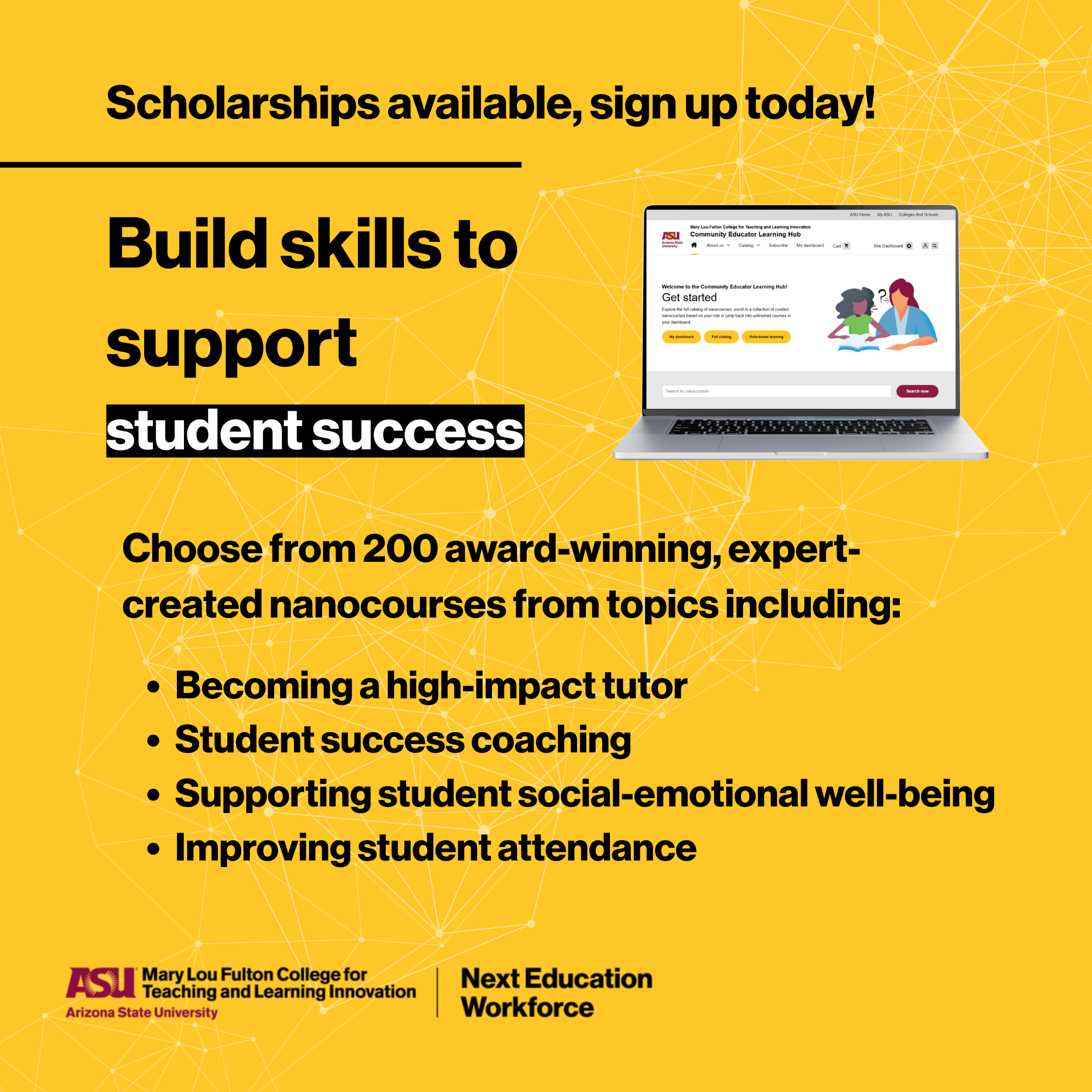
Our work aligns well with the mission of PSS to connect all students with comprehensive, evidence-based, people-powered supports. With our platform, the Community Educator Learning Hub, we can ready folks that are providing that support and help them to feel equipped to show up at their best when they’re working with students. We also have scholarships available for individuals and organizations that are serving PK-12 students. The scholarships provide full access to the platform through June 2027.
Lauren Conn, ASU (LC): For additional context, the Hub is composed of a robust catalog of about 200 nanocourses. Each nanocourse is approximately 15 minutes of self-guided online learning for volunteers and professionals serving in these student support roles, and those working with children can immediately put research-based practices in action.
We’ve been fortunate at the ASU Mary Fulton College of Teaching & Learning Innovation to not only be able to work with amazing faculty to develop the nanocourses, but we’ve also partnered with incredible community organizations, including members of the PSS coalition, such as City Year, with whom we co-developed a series of nanocourses, especially for student success coaches and folks serving in similar roles.
These are nanocourses that are relevant to being able to support children both academically and with their social growth.
MR: Another exciting opportunity that’s coming up, is that we are in the process of starting the work to create a suite of new micro-credentials. For onboarding and ongoing training, there is the catalogue of over 200 nanocourses, as we described, but some reading this may know that the Hub is also the host of the first official micro-credential for the high-impact tutoring field. That has been our first and only micro-credential, and now we’re developing three additional micro-credentials that will be rolled out over the course of the next school year. It’s a really exciting opportunity to couple the learning and the earning for people serving in student support roles, and we have some amazing partners helping to design this over the summer, so we’re really excited to kick off that work.
JL: Can you share a story or two that really captures the Hub’s impact on a student or community?
One recent testimony we received is from an individual who is in a student support role in which they’re supporting students with math. This community educator has over two decades of experience working with students, and they shared that while they have never been a fan of math, the nanocourse they took introduced them to math concepts and problem solving techniques they had never been exposed to before. They shared that it was really fulfilling to be able to say that after all this time they learned new things in math, and so they could say to their students “If I can learn this, so can you”. So this individual who works alongside students every day and has over two decades of experience, stopped believing that she couldn’t be a great math support after taking nanocourses, and has discovered this new confidence in being able to work with students in a subject area that she didn’t think she previously could.
LC: In addition to the feedback that we’ve gotten from individual learners on the platform, it’s been such a pleasure being able to work with program administrators and organization leaders, like Dr. Marina Barnett at Widener University. We’ve had the pleasure of being able to partner with her and support her tutoring program at Widener, where Federal Work-Study students work as tutors for K-12 students. And what’s been great is it was a new program as of a couple years ago, and Marina shared with us that having her tutors trained and credentialed on the Hub has really helped facilitate and enable the establishment of partnerships with local school districts in her community.
We love that we’ve been able to offer foundational, core courses that are relevant for folks serving in support roles at different sites across the country. The catalog offers a lot of flexibility too, for programs to also tailor the learning experience for their community. For example, City Year Sacramento was asked by their school partners to support early childhood literacy. So in addition to the student success coach’s foundational work, they were also able to utilize the nanocourses for early childhood literacy training and support their partner in a real time, customized way.
JL: How has being part of the PSS Coalition supported your work?
MR: Being a part of the coalition has given us a window into what’s happening across communities, school districts, and organizations nationwide. It’s given us the opportunity to hear directly from people on the ground about what’s working and where training gaps still exist. This insight not only allows us to think about how we grow and expand our own platform, but also allows us to make sure that what we’re offering is relevant to the needs of the people that are working directly with students.
LC: It’s also been a wonderful opportunity to scale and enable partnerships with folks who are doing incredible work across the country that are also a part of the PSS coalition, and to be able to connect with them and share best practices and take part in the learning networks. Our engagement in the coalition has improved our work, and we also know that we’re stronger together. It truly does take a village. It can be a challenge to have the bandwidth to build relationships with community-based organizations, school systems, higher education, and PSS has empowered amazing partnerships and projects to scale.
We have so many examples of how we’ve connected with PSS members and been able to collaborate on content, and on other types of support for people serving in student support roles.
It’s been invaluable to have PSS’s thought leadership, and the research has been essential to be able to communicate the importance of the work and the progress we’ve made to increase supports for more young people. The national guidelines for tutoring apprenticeships is just one example of how PSS has created more opportunities for the youth-serving workforce and people serving in student support roles.
JL: What advice would you offer organizations looking to strengthen or expand people-powered, evidence-based supports?
MR: You don’t have to build from scratch. There are tools, research, and actionable strategies that already exist for those serving in student support roles to be more confident in their role. It’s a matter of finding ways to get them in the hands of those folks that are doing the work.
And I think another piece of advice is don’t underestimate the power of a strong start. Onboarding matters, and when you invest in that first experience with your team members, it really sets the tone for everything else that follows. When people feel welcomed into a learning experience to build their skills and confidence, when it’s clear, accessible, and relevant to what they’re actually doing, they’re able to engage better.
LC: The Community Educator Learning Hub is meant to save time and resources, enabling programs to scale. It is a self-guided online learning solution that is complementary to the ongoing, synchronous, in-person, and contextual trainings many offer.`
Bring evidence-based training to your team
Thanks to the support from the Leon Lowenstein Foundation, individuals and organizations serving PK–12 students can access the Community Educator Learning Hub for free through the 2026–27 school year if they create an account by the end of December of 2026. Explore more than 200 research-based nanocourses designed to build the skills and practices that increase student engagement, motivation, attendance, and academic success. Create a free account to learn actionable teaching tips and strategies you can apply immediately. Organizations can request onboarding support and an administrator dashboard for their team by contacting CELearningHub@asu.edu.
Responses have been edited for brevity and clarity.

NEWSLETTER
Subscribe To Our Newsletter
Reference to any non-U.S. government organization, event or product does not constitute an endorsement, recommendation or favoring of that organization, event or product and is strictly for the information and convenience of the public.
This website is developed and maintained by the Everyone Graduates Center at Johns Hopkins University for the Partnership for Student Success.
It follows the website privacy policy found here. View the website's accessibility statement here.